
Strasbourg Observers

Submissions

We warmly welcome proposals for blogposts. Prospective contributors are invited to contact us by email with a brief outline of their proposed topic, indicating when they would be able to submit a full post. Please also disclose any personal involvement in the case you propose to discuss, for example as an attorney or adviser to the parties. We will let you know as soon as possible whether we are interested in your proposal.

As a general rule, we accept no more than one spontaneous submission from the same external author within any three-month period, unless exceptional circumstances apply. We do not accept proposals from undergraduate or graduate students, although we can make an exception when their posts are written under academic supervision.

By submitting a post, you agree not to submit it elsewhere while it is under consideration with us. If you wish to submit it elsewhere, please first withdraw your submission by notifying us. We do not publish posts that have already been published elsewhere.

Strasbourg Observers does not charge a fee at any stage of the publication process.

Blogposts can focus on:

  1. Recent developments in the case law of the ECtHR. In principle, we require blogposts to focus on judgments that are at most two months old at the time of publication.
  2. Other recent developments at the level of the ECHR system or the Council of Europe.
  3. Topical problems with Europewide resonance (e.g. COVID-19), examined through the lens of the ECtHR case-law.

Please note that we do not publish contributions that do not have a link to recent developments at the ECtHR.

Author guidelines

The editorial team reserves the right not to publish a post that does not conform to the below guidelines and/or does not meet our quality standards.

  • Length: Posts should be between 1,500 and 2,500 words.
  • Structure: For case commentaries, we encourage the following structure: (1) an introductory paragraph that draws attention to the post; (2) brief overview of the facts; (3) summary of the judgment; (4) analysis and commentary on the judgment; and (5) a short conclusion. Consult existing posts for examples. Please do not give the introductory paragraph a heading. Please do not number headings.
  • Content: The analysis/commentary part of the post should make a clear and original contribution to scholarship, be supported by appropriate references, and make up at least half of the post. We strongly encourage authors to mention and, preferably, discuss any separate opinions.
  • References to the judgment and separate opinions: Support your discussion of the Court’s reasoning and separate opinions with references to relevant paragraphs. Quote directly from the judgment or opinion, rather than the press release or legal summary. Use the format ‘(para 3)’ or ‘(paras 3-5)’. For separate opinions, specify the type of opinion. For example: ‘(dissenting opinion, para 3)’. Where necessary to avoid ambiguity, also identify the judge or judges, for example, ‘(dissenting opinion Judge Lemmens, para 3)’.
  • Other references: Incorporate references to cases, literature and other relevant sources into the text using hyperlinks. Avoid footnotes, although one or two may be used for explanations or additional context. Cite cases by name only, without application numbers or dates. Use ‘v.’ between the parties’ names. For Grand Chamber cases, add ‘[GC]’ after the case name. For example: ‘Yasak v. Türkiye [GC]’. 
  • Language: Please check your post carefully for spelling and grammar before submitting it. Use British English throughout, with single quotation marks for quotations and double quotation marks for quotations within quotations.
  • Author bio: Include a short bio of one or two sentences at the start of the post, stating your job title and affiliation.
  • AI policy: Blogposts submitted to Strasbourg Observers must reflect the original intellectual work of the listed author(s). The use of AI tools in the research and writing process is allowed, provided it aligns with this requirement. If AI contributes to a blogpost in a way that would require acknowledgment were it made by a human (such as substantive input into the research or writing) this use must be clearly disclosed and explained within the manuscript. AI cannot be credited as a (co-)author under any circumstances. Consequently, any AI involvement that would, if performed by a human, warrant authorship recognition is not permitted.

Editorial process

We will perform an internal review of submitted blogposts. We may suggest changes to language and structure or make substantive comments (e.g. when an argument could be developed more convincingly, or where a relevant element has been left out of the discussion).

We endeavour to assign an editor to a received submission within one week and to complete our review and reach a publication decision within three weeks of submission. These timelines may be extended during our summer break (mid-July to mid-August) and winter break (the last week of December and the first week of January).

On Strasbourg Observers

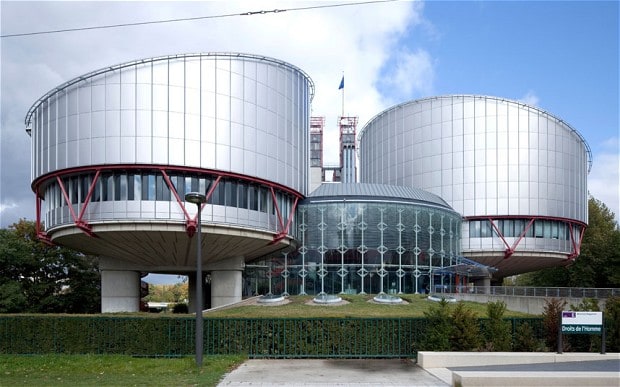
Strasbourg Observers is an academic blog that discusses recent developments at the European Court of Human Rights. The blog is run as an inter-university collaboration amongst the Dutch-language universities of Belgium. Associated research groups are the Human Rights Centre at Ghent University, the Centre for Government and Law at Hasselt University, the Leuven Centre for Public Law at KU Leuven, the Law and Development Research Group at the University of Antwerp and the Vakgroep Publiekrecht at the Vrije Universiteit Brussel.

Strasbourg Observers would not be possible without the valued work of countless guest bloggers. Visit the “Contact” page on our website to find out how to become one!
Strasbourg Observers