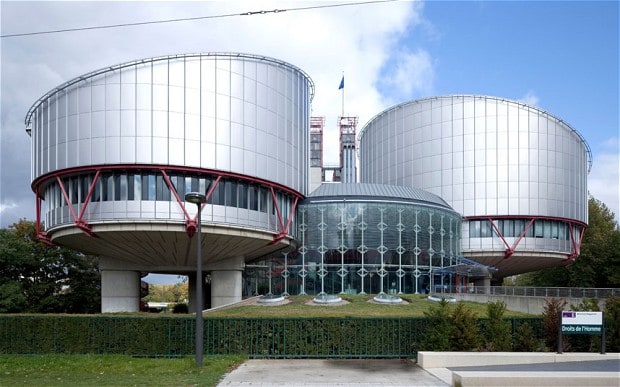
August 21, 2026
By Gor Vartazaryan
The relationship between the European Court of Human Rights (ECtHR) and Europe’s governments has rarely been under greater political scrutiny. Over the past year, migration has become the main point of an intense debate over the future of the Convention system. The debate began with a joint declaration by nine European governments in May 2025 criticising the Court’s interpretation of the Convention in migration cases and arguing that it had gone ‘beyond the original intent of the Convention’, before culminating in the adoption of the Chișinău Declaration by the Council of Europe’s Committee of Ministers in May 2026. While the declaration reaffirmed the member states’ commitment to the Convention and the independence of the Court, it also acknowledged governments’ concerns over migration, emphasised states’ sovereign responsibility to control their borders, and stressed the importance of maintaining public confidence in the Convention system. Perhaps most strikingly, it concluded by calling for ‘open, informed and constructive dialogue’ and communication that strengthens trust in the Convention framework as a whole.
Possibly in response to these initiatives, communication and visibility have become recurring themes in the Court’s recent institutional strategy. Under President Mattias Guyomar, the Court has continued to expand its public engagement through public speeches, outreach initiatives and digital communication (like live Q&A sessions, or Linkedin posts). This reflects a wider recognition that the authority of the ECtHR does not solely rely on the doctrinal soundness of Court’s judgments but also on the public understanding of its work.
Yet my recent experience conducting empirical research at the Court revealed a paradox. Although the Court appears more visible than ever, access to judges for independent academic research seems considerably more limited than it once was. This observation emerged unexpectedly during my MPhil research, which explored what motivates judges of the ECtHR to issue separate opinions. The project relied on semi-structured interviews with current and former judges. Conducting those interviews ultimately proved possible but the process of obtaining access became a research finding on its own right. Conversations with judges suggested that the institutional environment surrounding research interviews has changed markedly. While participation remains an individual decision, several interviewees described a more cautious approach towards engaging with researchers, reflecting broader concerns about institutional legitimacy, external communication and confidentiality.
This apparent shift is noteworthy because empirical research has played a significant role in shaping our understanding of the ECtHR. Much of what scholars know about judicial deliberation, decision-making and the role of separate opinions comes not only from quantitative analysis of judgments but also from researchers who were able to observe the Court’s internal functioning or interview judges directly. If opportunities for such research become increasingly limited, the implications extend well beyond individual research projects. They raise broader questions about how international courts engage with external scrutiny and what kinds of knowledge about judicial behaviour remain possible.
This post does not argue that the Court should abandon the confidentiality of judicial deliberations or encourage judges to speak publicly about pending cases. Those safeguards are fundamental to judicial independence. Nor does it suggest that the Court has adopted a formal policy prohibiting interviews with researchers. Rather, it reflects on whether the balance between institutional visibility (transparency) and academic accessibility may be changing now. At a time when the Court faces sustained political pressure while simultaneously investing in public communication, this evolving relationship deserves closer attention.
The contrast with earlier generations of empirical scholarship is striking. Two decades ago, researchers studying the ECtHR enjoyed a degree of access that would be difficult to imagine today. Perhaps the most remarkable example is Nina-Louisa Arold’s research, conducted between 1998 and 2001, during which she was granted permission to observe the Court’s judicial deliberations (p. 17). Such access provided an unparalleled opportunity to study the dynamics of collective decision-making within ECtHR and resulted in one of the most detailed accounts of the Court’s internal working methods. Similarly, the Dutch socio-legal scholar Fred J. Bruinsma was able to conduct nineteen non-anonymised interviews (2006) with ECtHR judges while researching judicial identities and the practice of separate opinions. Importantly, Bruinsma noted that the then President of the Court, Luzius Wildhaber, welcomed the project and expressed the hope that judges would participate, while making clear that participation remained entirely voluntary (p. 209, ft 19). Because interviewees agreed to be identified, Bruinsma was able to analyse their perspectives alongside their professional backgrounds (including scrutinising individual CV), producing insights that continue to shape empirical scholarship on the Court today. To give some more evidence: White & Boussiakou interviewed 9 judges in 2007, Dunoff and Pollack interviewed 8 current and former ECtHR judges between 2016-2018, Creamer & Godzimirska interviewed 2 judges in 2017. The latter study involved 12 interviews, but the remaining interviewees were Registry officials. This distinction is important for the purposes of this post, which focuses specifically on access to judges.
These studies reflected more than favourable research conditions. They embodied a particular institutional understanding of the relationship between the Court and academic inquiry. Judges appeared willing to engage directly with researchers, while the institution itself viewed such engagement as compatible with judicial independence and beneficial to understanding the Court’s work. Empirical scholarship flourished accordingly, enriching empirical (and doctrinal) analyses with insights into judicial behaviour that could never be inferred from judgments alone. Whether this institutional culture has changed is difficult to establish definitively. However, comparing these earlier experiences with the circumstances encountered during my own research suggests that access to serving judges has become considerably more constrained. The remainder of this post explores what that change might tell us about the Court’s evolving approach to external engagement.
My own research began with a relatively straightforward objective. I sought to understand what motivates judges of the European Court of Human Rights to write separate opinions in migration cases (whether concurring or dissenting) and therefore adopted a qualitative methodology based on semi-structured interviews with current and former judges. Like earlier empirical studies of judicial behaviour, I assumed that at least some members of the Court would be willing to discuss their experiences, subject to the obvious constraints imposed by judicial ethics and the confidentiality of deliberations. The initial results were discouraging.
After obtaining ethical approval, I contacted fifteen judges, eleven former judges and four serving judges, by email and LinkedIn. The latter reflected the recent institutional development: in 2025, the Court launched its official LinkedIn presence and encouraged judges to establish professional profiles as part of a broader strategy to increase the Court’s visibility (and public engagement). My requests explained that the project examined the role of separate opinions at the Court and emphasised that participation would be entirely voluntary, confidential and subject to university ethical approval. The response rate was striking. Eleven judges never replied despite follow-up messages, three declined to participate, and one initially agreed to an interview but failed to attend the scheduled meeting and subsequently stopped responding to my emails. At that stage, it appeared likely that the qualitative component of the project would have to be abandoned entirely in favour of a purely doctrinal and textual analysis of separate opinions.
The project ultimately took a different direction through chance rather than careful planning. At an academic conference, I had the opportunity to meet a serving ECtHR judge, who encouraged me to broaden the scope of the research beyond migration-related cases. Several scholars also suggested approaching different judges and reconsidering the framing of the project. Rather than focusing specifically on migration, I reformulated the research around a broader question: what motivates judges to write separate opinions? That shift proved decisive. Using snowball sampling, whereby interviewees recommended colleagues who might also be willing to participate, I eventually conducted interviews with eight judges: three serving judges and five former judges.
The interviews themselves focused on judicial decision-making and the practice of writing separate opinions. Yet another topic repeatedly emerged without prompting: the changing relationship between judges and academic researchers. Several interviewees independently described a more cautious institutional approach towards participating in research interviews. They identified three main reasons. First, interviewees emphasised the need to protect the confidentiality of judicial deliberations. The Strasbourg Court functions through collective decision-making and preserving the confidentiality of internal discussions is widely regarded as essential to maintaining judicial independence and collegiality. Secondly, judges noted that the growing volume of requests that they receive from academics, journalists and other external actors, makes participation increasingly difficult from a practical perspective. One serving judge explained that the Court had recently discussed how judges should respond to those requests. According to that judge, participation remained entirely voluntary, but there was a shared understanding that such requests should generally be approached with greater restraint. Finally, judges pointed to concerns about institutional legitimacy. In an increasingly politicised environment, several interviewees suggested that there is greater awareness of how public statements by judges may be interpreted outside the Court.
Importantly, these explanations should not be interpreted as evidence of a formal institutional policy prohibiting interviews. My research uncovered no such policy, nor did any interviewee suggest that judges are prevented from engaging with academic researchers. Indeed, the interviews reported in this study demonstrate the opposite: meaningful access remains possible. Nevertheless, during the course of my research, I became aware of an anecdotal but striking example involving another researcher conducting fieldwork in Strasbourg. After spending a considerable period interviewing judges, and once the empirical material had already been collected, the researcher received requests from several interviewees to withdraw from the study. While research ethics protocols routinely allow participants to withdraw within a reasonable period following an interview, these requests came at a much later stage of the project and were therefore unusual. Although the reasons were not explained, the episode resonates with the broader picture emerging from my own interviews of a judiciary that has become increasingly cautious about participating in academic research. What appears to have changed is the institutional culture surrounding such engagement. Where earlier generations of scholars encountered an environment that actively facilitated empirical research, today’s researchers may instead encounter one that places greater emphasis on caution, discretion and the careful management of external communication.
This impression is reinforced by another aspect of the research process: concerns about anonymity. Whereas Fred J. Bruinsma was able to identify the judges he interviewed and analyse their responses alongside their professional backgrounds, every judge who participated in my project requested anonymity or discussed the limits of anonymity before agreeing to be interviewed. Several asked detailed questions about whether quotations could reveal their identities and how confidentiality would be protected. These concerns are entirely understandable given the Court’s contemporary socio-political context, yet they illustrate how expectations surrounding empirical research have changed over the past two decades.
Of course, one research project cannot establish that the Court as an institution has fundamentally changed its relationship with academia. The evidence presented here is necessarily limited and reflects the experiences of a single (and early career) researcher working on a specific topic. It is also possible that judges who are more receptive to discussing their work were overrepresented among those who ultimately agreed to participate, while more restrictive voices remained inaccessible. Nevertheless, when these experiences are considered alongside earlier empirical studies, they suggest a broader question. If the Court is simultaneously investing more heavily in public communication and institutional visibility, why does independent academic access appear to have become more difficult? Has the Court become more transparent, or has it become more effective at shaping the narrative through which it is seen?
The ECtHR finds itself at a defining moment. Faced with renewed political scrutiny, particularly in relation to migration (and border protection cases), it has understandably invested considerable effort in explaining its role, strengthening public opinion, and engaging more actively with external audiences. The Chișinău Declaration itself reflects this moment, reaffirming the independence of the Court while emphasising the importance of ‘open, informed and constructive dialogue’ in safeguarding the Convention system.
My experience suggests that another aspect of this dialogue deserves attention: the relationship between the Court and the academic access. Earlier generations of socio-legal scholars benefited from a level of access that produced some of the most influential empirical studies of the Court’s internal functioning. By contrast, my own research indicates that engaging with serving judges has become a more cautious and carefully managed process. This does not mean that meaningful research is no longer possible, my project ultimately benefited from the generosity of eight judges who were willing to share their experiences (which I am very grateful for), but it does suggest that the conditions under which such research is conducted have changed. Whether this reflects a temporary response to heightened political pressures or a more enduring transformation in the Court’s institutional culture remains to be seen. Equally, there are compelling reasons why judges may prefer greater restraint. Protecting the confidentiality of deliberations, preserving judicial independence, and avoiding the risk that individual remarks are taken out of context are all legitimate institutional concerns. These values should not be underestimated.
This points to an important distinction between visibility and openness. The Court is undoubtedly more visible than it was a decade ago, particularly through its strategic use of social media and public communications. Yet this visibility appears to be largely reactive -closely linked to concerns about institutional legitimacy – and based on the premise of controlling the message, rather than fostering greater openness to academic inquiry. At the same time, independent empirical research serves a different purpose from institutional communication. While the Court’s outreach initiatives explain and promote its work, academic research seeks to understand it. These functions are complementary rather than competing. I argue that careful qualitative research does not undermine judicial legitimacy, on the contrary, it contributes to a richer and more nuanced understanding of how international adjudication operates in practice. Perhaps, then, the central question is not whether the Court has become more or less transparent, but what transparency (visibility) now means. If openness increasingly takes the form of carefully managed institutional communication rather than direct engagement with independent researchers, the nature of our knowledge about the Court may also change. At a time when the ECtHR continues to play a pivotal role in protecting human rights across Europe while navigating an increasingly contested political environment, ensuring that there remains space for rigorous, independent scholarship should itself be understood as part of the ‘open, informed and constructive dialogue’ to which the Council of Europe has recently committed.

Strasbourg Observers is an academic blog that discusses recent developments at the European Court of Human Rights. The blog is run as an inter-university collaboration amongst the Dutch-language universities of Belgium. Associated research groups are the Human Rights Centre at Ghent University, the Centre for Government and Law at Hasselt University, the Leuven Centre for Public Law at KU Leuven, the Law and Development Research Group at the University of Antwerp and the Vakgroep Publiekrecht at the Vrije Universiteit Brussel.
Strasbourg Observers would not be possible without the valued work of countless guest bloggers. Visit the “Contact” page on our website to find out how to become one!