July 01, 2025
Dr. Marialena Tsirli
***
A note from the team:
To celebrate the 15th anniversary of the Strasbourg Observers Blog, we organised an in-person symposium with scholars, practitioners, and members of the ECtHR on 8–9 May 2025 in Ghent. Connecting in person with so many regular contributors was a wonderful experience and led to engaging dialogue with current and former judges of the Court. To allow our online community to participate in the thought-provoking discussions that took place, we will be publishing selected position papers on the blog over the next two summer months. We wish all of our readers a well-deserved break with a little peek on Strasbourg Observers here and there.
Our first post in the series comes from the Keynote Speech delivered by the Registrar of the Court, Dr. Marialena Tsirli.
***
Dear Judges,
Esteemed Professors,
Dear guests, both in the room and online,
It is a great honour for me, as the Registrar of the European Court of Human Rights, to be here in the beautiful city of Ghent to deliver this keynote address to close the 15th Anniversary Symposium of the Strasbourg Observers.
I would like to express my sincere gratitude to the professors at Ghent and Hasselt Universities for this invitation, and for the hospitable and warm welcome extended to me, and to the current and former Judges of the Court.
We are truly delighted to be celebrating this anniversary with you, with the readers, contributors, and current and former editors of Strasbourg Observers – a true academic community brought together by the European Convention on Human Rights. It is entirely fitting that your 15th anniversary coincides with the 75th anniversary of the European Convention on Human Rights signed in Rome on 4 November 1950. Your symposium represents an important opportunity to engage in discussion on timely and relevant cross-cutting topics on our Convention and the Court’s jurisprudence.
Many of the events that the Court is organising, or co-organising, during this special anniversary year are partnered with academics and Universities. Your external, academic and sometimes critical view of our case-law through your blogposts is essential to our own work behind the scenes.
I say critical because as we know, the Strasbourg Observers can sometimes be quite scathing of our Court’s judgments including in your ‘Best and Worst judgments’ survey of each year.
Whether I agree with every post or not, I would like to thank you all at Strasbourg Observers for the incredible work that you do in disseminating knowledge about the Court’s case-law. Your contribution to the outreach of the Court’s jurisprudence is not a negligible one and I think that you should be very proud of the name you have earned for yourselves during the last 15 years.
This outreach is fundamental because courts need to engage with their public. This is especially important for international courts who can seem one step removed from the average citizen. The frequency and interest with which you engage with our case-law assists in bringing our case-law ‘home’.
This afternoon I will take stock of how the Court has developed as an institution since its inception as a full-time body and I will look at the qualities that an international court needs to establish itself firmly on the international stage.
As a staff member of the Registry of the Court for more than three decades and as Registrar of the Court for the last four and half years, I will offer my own perspective, which naturally is that from inside the Registry. Indeed, I have chosen to give you examples of evolutions and changes to working practices. There are certainly many examples of jurisprudential developments that have had a profound impact on the institution. These are very important but are not the focus of my speech today.
The topic of the development and ‘institutionalisation’ of the Court is not frequently discussed (see generally, here, here and here); it is seldom that we look back on how far we have come as an institution. Indeed, like any institution, we tend to focus on the future and further ways to improve the effective functioning of the Convention system. This is of course normal, because as a public institution we are accountable to our Member States.
However, it is also instructive from time to time to take a look at what ensures the legitimacy of courts and conversely what threatens them.
Today, the Court is well-known across the Council of Europe’s 46-member States and by the people living in those states, who number over 700 million. Let me add here that of course, until its expulsion from the Organisation, as you all know, the geographical remit also extended to the Russian Federation. Yet the Court remains competent to deal with applications brought against Russia so long as these raise complaints which allege a violation of the Convention until 16 September 2022.
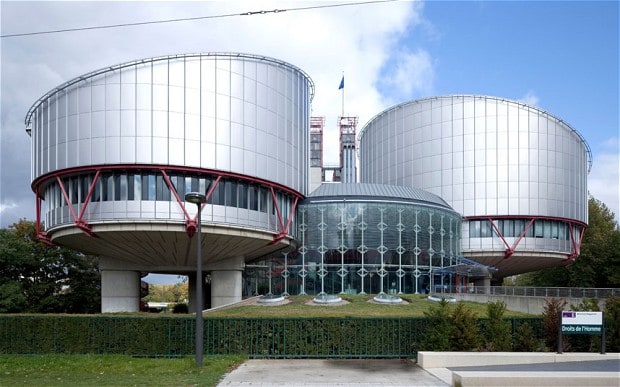
One might say that we are the most visible institution of the Council of Europe. A mere photo of the Court’s building in a media report is sufficient for many people to understand that the topic under discussion concerns human rights. Indeed, our building, the iconic work of Lord Richard Rogers, is also celebrating an anniversary this year, its 30th anniversary since it first opened its doors. On 21 September the building will be opened to the public for an Open Doors events and I invite you to attend if you can.
Looking from the vantage point of 1959, when the Court was established, none of this was certain. So how did we arrive here?
The question of the successful establishment and institutional legitimacy of international courts is a complex one. It brings in many societal factors, and various questions of law, jurisprudence, good governance and efficient management, as well as many other matters. Many of these elements are governed by outside forces. In respect of a regional human rights court, such as the European Court of Human Rights, the role of the Member States of the Council of Europe should not be underestimated. The Member States have an influential role in shaping the working conditions of the judicial arm of the organisation, firstly through funding, but also through political support and a helpful eye on ensuring that working methods are kept up to date.
There are some elements, however, which are controlled to some extent from within the Court.
It is probably not possible to identify an exhaustive list in that regard, but I would like to highlight three for the purposes of my intervention today:
Firstly, that court rulings should be legally sound; secondly, that courts should operate openly and transparently (Pollack, p 387), thirdly, for a court to be efficient it is necessary for its rulings to be accepted.
I think these are a good starting point and I suggest that we use them as a framework to look at how the Strasbourg Court has established itself as an institution and the Registry’s contribution in that regard.
As a caveat, let me say at the outset that I am not intending my speech to be self-congratulatory. It is not a matter of patting ourselves on the back and saying that we have done a wonderful job. By identifying what has worked for us as a Court in reducing our backlog or streamlining our working practices, we also see what has not worked. Moreover, these examples can serve as useful indicators for other courts, both international and national, and can also help us to look forward to see where we go from here.
However, before I turn to my framework I have some preliminary points.
Firstly, I would like to update you on the current situation of the Court as regards its case-processing. Secondly, I will address another preliminary question, namely what is the Registry, or rather, who are the Registry? Thirdly, I will take a historical look at the establishment of the full-time Court.
For over 60 years the Court has dealt with well over 1 million applications (to be precise, with around 1,060,000 applications), and handed down almost 27,450 judgments. The number of pending applications before the Court is currently 61,050.1 This represents a decrease of 11% compared to 1st January 2024.
Last year, the Court ruled on 36,819 applications. A large proportion of these applications were joined; processing cases in groups is indeed a mark of the Court’s efficiency in dealing with a large number of applications.
Since the beginning of this year, the Court has ruled on 7,600 applications. Judgments were delivered in respect of 1,372 applications, with a large percentage decided by three-Judge Committees across all five Sections.
Chambers continue to focus on impact2 and other priority or high-profile cases in a variety of fields in recent months.
Single Judges continue to filter out inadmissible applications in an efficient manner. Almost 5,300 applications have been dealt with since the beginning of the year.
Five States continue to be at the origin of around three quarters of all pending applications: Türkiye, Russia, Ukraine, Romania and Poland, the latter having switched position with Greece earlier this year.
As you know when Russia ceased to be a high Contracting Party to the Convention on 16 September 2022, it was at the top of the list of countries in terms of pending applications against it, with 17,450 applications. Today there are 8,200 applications pending against Russia, 5,400 of which are related to armed conflicts. The Court has more than halved the figures of pending applications against Russia since September 2022.
About 11,100 pending applications concern conflicts between two States (Russia/Ukraine, Armenia/Azerbaijan and Georgia/Russia). These applications are particularly complex and require special efforts, particularly in terms of dedicated staff and resources. A specific Conflicts Unit has been created within the Court to deal with these applications.
There are currently 15 inter-State cases pending before the Court (concerning 19 applications).
Rule 18 of the Rules of Court states that the task of the Registry is to provide legal and administrative support to the Court in the exercise of its judicial functions. As I often say, the Registry would have no purpose of existing if the Judges weren’t there, and at the same time, the Judges cannot effectively carry out their duties without the indispensable support of the Registry. Our roles are deeply interconnected – one cannot function without the other. We are two sides of the same coin: our success is entirely dependent on our ability to work together seamlessly.
In terms of its judicial decision making, the Court is a fully autonomous and independent body. However, it is an institution that in practical terms belongs within the Council of Europe. The Registry’s staff are therefore Council of Europe employees, international civil servants who are recruited by the Council of Europe, through open competitions, to work for the Court.
Currently, we have about 700 staff members. There are a small number of seconded lawyers from member States who work for the Registry, and of course we also have some study visitors and trainees from various academic institutions. All staff, both Council of Europe staff and seconded staff, are subject to the staff rules and guidelines, including ethical rules. In line with the Court’s judicial autonomy, the Secretary General of the Council of Europe has delegated many decision-making powers, in particular concerning management of staff, to me, the Registrar. And when they start working at the Court, Registry staff swear an oath before me as Registrar, committing themselves to respect the rules of Court.
About a third of the Registry’s staff are lawyers, some 250, recruited from all our member States and coming from academia, legal practice, government or civil society. This level of diversity makes for a truly exceptional and rich working environment.
I mentioned that colleagues are recruited to the Court through open competitions. But it is also important to say that some of our colleagues came from other departments of the Council of Europe, and later moved to the Registry or vice-versa.
From incoming requests under Rule 39 to Grand Chamber work, Registry lawyers assist the judicial process in every possible way: they filter incoming cases; they carry out legal research; they prepare drafts of judgments and decisions for the Judges of the Court on the basis of their instructions; they deal with correspondence; they manage hearings; and much more. Their task is to provide efficient and complete support to the Court’s judicial decision makers.
But this work cannot be done by Registry lawyers alone. The Registry has the benefit of assistants and support staff, without whom we would all be lost. And while all Registry lawyers are fully bilingual in English and French, the work of the Court would simply not be possible without our interpreters and translators. They provide interpretation during deliberations and hearings and ensure that the documents we publish are fully accurate in both languages.
Our logistics and IT colleagues are also vital. The Court has bespoke IT systems that require particular maintenance, because they are specifically tailored to our case management needs and are designed to ensure absolute security.
Last and very much not least, we have our colleagues who work in our Communications Department. I will speak later about their work when addressing the notion of ‘transparency’. Effective communication in today’s world is very challenging but crucial.
Under the system originally established by the Convention, which prevailed for almost forty years until 31 October 1998, three institutions exercised responsibility for enforcing the obligations undertaken by the contracting states: the European Commission of Human Rights, the European Court of Human Rights and the Committee of Ministers of the Council of Europe. Under this system, all applications brought by individual applicants or Contracting States were the subject of a preliminary examination by the European Commission of Human Rights which determined their admissibility and, in respect of complaints declared admissible and where no friendly settlement had been reached, drew up a report establishing the facts and expressing a non-binding opinion on the merits of the case. The Commission and/or a government of a state concerned could then decide to refer the case to the European Court of Human Rights for a final, binding adjudication. If the case was not brought before the Court, it was decided by the Committee of Ministers.
Another striking difference between then and now is that for a long time it was not possible for applicants to bring their case before the Court themselves. It was only following the entry into force of Protocol No. 9 to the Convention, in October 1994, and in respect of States which had ratified it, that applicants obtained that right. Of course, as the Explanatory Report to Protocol No. 9 makes clear, the idea of empowering individuals to seize the European Court of Human Rights was not a new one. It was mentioned as early as May 1948, at the Congress of Europe, and appeared in the draft European Convention on Human Rights drawn up by the European Movement in July 1949. This idea was, however, rejected in the course of the discussions, on the ground that ‘the interests of the individual would always be defended either by the Commission or the Committee of Ministers…’.
For the first fifteen years the Court was dealing with little more than one case per year; yet it still laid down some important founding principles for it case-law (see, for example, Lawless v Ireland (1960)) and the Belgian Linguistics case (1968)).
It was not until the 1970s that the Court started to become a real player in European integration (Lambert, p 229). Indeed, one academic has called this period an era of landmark Strasbourg jurisprudence (Bates, p 320). Examples may be given of the seminal cases of Golder v. the United Kingdom (1975), Tyrer v the United Kingdom (1978), Airey v Ireland (1979) and Marckx v Belgium (1979), where the Court begins to develop its case-law on the effective protection of rights, the living instrument doctrine, the positive obligations, and its approach to restrictions on Convention rights.
The revolutions in the Eastern Bloc and the collapse of Communism in the 1990s led to the accession of more than fifteen new States to the Convention3, and thus to more than fifteen new Judges. This period therefore brought an immense increase in the workload. The accession of new States also meant that more staff had to be recruited from these new member States, so the historic seat of the Court, a two-storey building designed by Bertrand Monnet, soon became too small.
However, by the time we moved to our current premises, a major revolution in the Convention system had taken place, culminating in the entry into force of Protocol No. 11 in 1998 which created a single full-time European Court of Human Rights. This change put an end to the European Commission’s filtering function, enabling applicants to bring their cases directly before the Court.
There were 7,771 applications pending on 31 December 1998. That figure rose to 160,000 applications in 2011. This exponential growth became a serious problem that the Member States had to address, lest the Court ‘become a victim of its own success’.
2010 marked the beginning of the so-called ‘Interlaken process’. Under the Swiss chairmanship of the Committee of Ministers, a major conference was held in Interlaken, Switzerland, to establish a roadmap for the evolution of the European Court of Human Rights. At further Inter-Governmental conferences in Izmir, Brighton, Brussels and Copenhagen, the Member States of the Council of Europe addressed the problems facing the Court and the Convention system. These conferences led, in particular, to the adoption of Protocols Nos. 15 and 16 to the Convention.
The Interlaken reform process, which ended in 2020, was admittedly a positive exercise that enabled States Parties to reaffirm their commitment to the values defended by the Council of Europe and to recognise the exceptional contribution of the Convention system and the Court to the protection of human rights in Europe. It also strengthened the notion of shared responsibility which underpins the Convention system. In this context it is important to note that all the declarations adopted after these Inter-Governmental conferences have emphasised the crucial role which States Parties play in implementing the Convention at domestic level and in effectively executing the Court’s judgments. The same was repeated in the Reykjavik declaration, following the Fourth Summit of the Council of Europe in May 2023, where the States stood united around their common values and recommitted to the Convention system as ‘the cornerstone of the Council of Europe’s protection of human rights’.
****
After these preliminary remarks, I will now address the three fundamental elements that I have identified at the outset. For each I will give several concrete examples of innovations of case-processing and judicial policy which the Court has set in motion in order to fulfil these aims.
So, let me begin with my first point by taking a look at the notion of ‘legally sound judgments’.
The innovations I would like to highlight under this heading are designed to improve the consistency of the Court’s case-law and practice.
The development and professionalisation of the Court’s Research Division which now falls under the Jurisconsult’s Directorate is my first example.
The Research Division began as a small ad hoc unit of few lawyers. It was, and still is, responsible for producing comparative law reports in support of pending Chamber and Grand Chamber cases, as well as international and Convention reports. These reports are essential for our legally sound judgments.
Comparative law reports allow the Court to understand whether or not a European consensus exists on a particular issue. They are still produced within the Court. However, for a number of years now, national contributions have been provided through the Superior Courts Network, allowing Member States to provide contributions themselves which are then reviewed by our lawyers and the relevant national Judge.
International law reports allow the Court to understand the full picture at the global level. The dialogue between the universal and regional human rights mechanisms is one of the most powerful tools to enhance consistency in the case-law and practice. With this in mind, the Court continues to take into account the relevant case-law of other international courts, not least the International Court of Justice, the International Criminal Court and the Court of Justice of the European Union. It also maintains close contact with, inter alia, the Inter-American Court of Human Rights, the African Court of Peoples and Human Rights and the United Nations Human Rights Committee.
My second example is the development of the role of the Jurisconsult in enhancing consistency of our case-law. With five Sections of the Court examining applications each week, it is essential to harmonise the approach taken, while of course bearing in mind that the Judges must take their decisions according to the facts of each case. The role of the Jurisconsult was established in 2014. Her team is now responsible for reading through the draft Section files each week. When needed, she prepares observations which are sent to the Judges of the relevant Section in advance of their deliberations to draw their attention to potential inconsistencies in the Court’s case-law and suggest additional or alternative case-law references. These observations are merely suggestions and in no way interfere with the judicial decision-making. However, the Jurisconsult has a bird’s eye view of the cases being processed each week by the Chambers, as well as by the Committees of three judges. Therefore, her observations are a valuable tool and help to ensure that the Court’s decisions and judgments are consistent and therefore legally sound. Another way in which case-law consistency is ensured is through the weekly meetings of all Section Registrars and Deputy Registrars. We get together every Friday morning to go through the cases discussed by the Sections and inform each other of important jurisprudential advances or unusual approaches. In this way we all keep abreast of the drafts which are being deliberated on. We also exchange information on other developments within the Council of Europe which have an influence on the Court’s work.
Finally, legally sound rulings must be based on a solid and accurate understanding of national decisions. Here the Court has developed its outreach with national courts through bilateral meetings and visits which enhance judicial dialogue. A key step was the creation in 2010 of the Superior Courts Network. This is a network of apex courts, with a dedicated website managed by the Court to support exchanges. Access is limited to the members of the Superior Courts which have privileged access to non-public material such as the Jurisconsult’s analytical notes on new decisions and judgments, a weekly selection of notable decisions and judgments by the Directorate of the Jurisconsult, and research reports on a range of Convention topics prepared under the supervision of the Jurisconsult. The Network now consists of 111 superior courts from all Member States and 4 observer courts.
The next criteria I have identified for the success of the Court as an institution is that it should operate openly and transparently. It is of course important to distinguish between the necessary confidentiality of the judicial work concerning the substance of the cases and the need for the public to understand the work and the rulings of the Court.
Openness and transparency about the Court’s judgments and decisions, and about the institution itself is another matter and one to which the Registry profoundly contributes. In the early days, as you might expect, there was a great deal less transparency than today. The Commission’s hearings were closed, and the Registry, then called ‘the Secretariat’, ensured that the decisions were later published in yearbooks and collections of decisions, which were available in various law libraries.
The Court has always been more of an open institution in the sense that its hearings have always been public. Judgments and decisions were published in official printed series, mainly by the Council of Europe. Again, through the efforts of the Registry, these were made available to national governments, legal scholars, and law libraries across Europe.
In 1999 everything changed with the digitalisation of the Court’s work and the creation of the HUDOC database. This is a comprehensive tool which we all now take for granted. Its creation required considerable input from the Registry and revolutionised access to the Court’s case-law. Not long after its creation, some important judgments began to be published in non-official languages. This initiative received significant support from the Council of Europe around 2012, and today many of the judgments and decisions are also available in non-official languages, often provided by national bar associations.
In 2022, the public launch of our Knowledge Sharing platform (ECHR-KS) was a significant milestone in the accessibility of human rights law. This initiative marked a transformative shift in how legal professionals, researchers, and the public engage with human rights jurisprudence. This platform aims to provide comprehensive and up-to-date information on the Court’s case-law, and complements existing tools like HUDOC. It offers thematic and contextualized analyses of developments in the Court’s case-law through specific Convention Articles and transversal themes. The content is updated weekly and is available in both official languages, English and French. Just recently that platform was launched in three non-official languages, Turkish, Ukrainian and Romanian. If we can secure the necessary funding, we fully intend to extend the platform to other non-official languages. We are truly committed to “bringing the Convention home” as I like to say.
Finally, under this heading, I would like to highlight the important work of the Registry’s press and media colleagues who contribute greatly to the visibility and openness of the Court’s work. Our Communications Department now comprises some 19 staff members.
In the past, the drafting of press releases was the responsibility of the drafting lawyers, but this has changed with the creation and development of a dedicated Press team. The Press Unit, consisting of five press officers and three assistants, drafts press releases, produces various Q&As on high-profile cases, maintains factsheets, handles the Court’s media contacts and organises the President’s annual press conference. The task of explaining a judgment or a decision accurately and in plain language is not an easy one. I know that the Court’s press releases are appreciated by many interlocutors.
You may also have noticed a number of videos on our website and on our YouTube channel, produced by the Registry’s Public Relations Unit. These include interviews with our newly sworn-in judges but also with members of the Registry. We focus on topical issues, such as climate change and the environment and our aim is to explain our case-law to a wider audience. Our Public Relations Unit is also responsible for our social media presence which we are committed to developing. We don’t forget that our rulings are not only read by legal professionals.
Another important part of our Communications Department is our Visitors Unit. While our building is not open to the public, we open the Court to visitors for our public hearings and for study visits, where we welcome judges, lawyers and students. We also host three moot competitions. Last year alone, we welcomed over 12,000 members of the public to our building.
There are two key elements here which I will deal with separately.
On the question of efficiency, I would like to highlight the enormous reforms in case management which the Court has undertaken as part of the Interlaken reform process which I referred to in my introductory remarks.
These measures taken by the Court have led to a dramatic decrease in the number of pending applications before the Court from more than 160,000 at its highest point in September 2011.
I propose to see these reforms in terms of (i) reducing the stock of clearly inadmissible cases; (ii) reducing the number of repetitive well-founded applications and (iii) dealing with important Chamber or Grand Chamber applications.
How did we reduce the stock of clearly inadmissible applications?
This was made possible by the introduction of the Single Judge procedure and the creation of the Filtering Section in 2011. As a result of these measures, the Court has been able to deal with new incoming Single-Judge applications on a ‘one-in one-out basis’. Rule 47 has clarified what constitutes an application form and now ensures that applications are complete and properly presented before being examined.
That being so, as the Court has repeatedly stressed, the right to lodge an individual application remains the cornerstone of the Convention system and while filtering is, for the reasons explained above, essential, it does not constitute a goal in itself.
What about repetitive but well-founded applications?
The reform process has consistently emphasised the crucial importance of Member States providing effective remedies at the domestic level and addressing the underlying structural problems that give rise to the applications brought before the Court. If the root cause of a systemic problem remains unaddressed at the national level, the Court will continue to be overwhelmed by repetitive applications and the efficiency of the Convention system will be compromised.
The pilot-judgment procedure was thus conceived by the Court as a response to the increase in its caseload which comes as a result of unaddressed structural or systemic dysfunctions at the national level. Since Broniowski v Poland in 2004, the Court has used these pilot judgments to instruct the Contracting States to take general measures in the interest of all actual and potential victims.
We also created the ‘well-established case law’ procedure (‘WECL’), which was further developed into the WECL fast-track procedure. Here we use technology to group applications and deal with issues relevant to each State more quickly and in a more simplified way.
Finally, what about well-founded, non-repetitive applications?
Let me give you some examples of our innovations to address this.
In 2016 we introduced the immediate simplified (IMSI) communication procedure where governments are asked to provide us with a short statement of the facts of the case. Since 2019 we have introduced a dedicated non-contentious phase of the proceedings. We have increased our use of friendly settlements and, in appropriate cases, unilateral declarations, with the aim of providing applicants with quicker and more effective redress, thereby enabling the Court to concentrate its resources on applications which it considers to be a priority. At this point, I would like to remind you that in June 2009 the Court adopted a priority policy with a view to speeding up the processing and adjudication of the most important, serious and urgent cases.
This brings me to our ‘impact’ case-processing strategy which was put in place in 2021 and is designed to make a significant contribution to ensuring that the Court remains a Court that matters – or in French ‘une Cour qui compte’. The strategy introduced a new category of ‘impact cases’ in order to make the Court’s work more directly relevant for applicants and in the Member States. The aim was to measure the Court’s impact not only in numerical terms but also in terms of its judgments in priority and ‘impact’ cases which address here and now core issues of relevance to the State concerned and/or to the Convention system in general. If we look at recent Chamber and Grand Chamber rulings of the Court in recent years since 2021 I think we can see concrete examples of the success of this policy. I am thinking here of our three landmark rulings on climate change from last April; but also, of Chamber judgments. To give just a few examples:
– employment-related measures imposed on health care and social health workers for refusing to get vaccinated against Covid-19;
– restrictions on the freedom of expression on a practicing doctor for making scientifically untenable statements about ineffectiveness of vaccines;
– the protection of whistle-blowers in specific contexts, such as when the employment relationship has ended;
– State regulation of prostitution, notably in relation to the model of punishment of the users of prostitution;
– family reunification in the context of immigration;
– limitations on the right to stand for parliamentary elections on the grounds of a past active participation in the Communist Party and other political activities;
– measures reducing the use of Russian as the language of instruction in compulsory second stage of public and private pre-school education in Latvia;
– respect for rights and protection of transgender persons from discrimination (see here, and here);
– impossibility for a terminally ill patient, suffering from an incurable progressive neurodegenerative disease, to be assisted in dying, by virtue of a blanket and extraterritorial ban on assisted suicide.
Without this strategy, most of these cases would have probably remained pending before the Court for many years.
I turn now to the second element of this section: acceptability. The impact, or acceptability of the Court’s judgments, can be measured in a number of ways. The most obvious is how well the judgments are respected. Failure to enforce judgments undermine the authority of the Convention system and of the Court. As the Council’s Secretary General recently commented: ‘The efficient execution of the Court’s judgments is essential for the rule of law and democratic accountability in Europe’.
However, because of the way the Convention works, the Court does not supervise the enforcement of its judgments, the Committee of Ministers does. We can therefore turn to their statistics, according to which, the average rate of enforcement of the Court’s judgments since the first judgment is 80%. This is a generally positive statistic, although it does not mean that there are no challenges in this area. There are many. According to the Committee’s annual report at the end of 2024, a total of 3,916 cases were pending full implementation, including 1,149 leading cases. However, we should not lose sight of the overall picture which is that the Court’s judgments are, on the whole, accepted and implemented by States.
Here again, the Registry has played a role in organising technical exchanges with the Department for the Execution of Judgments. This was welcomed in the Reykjavik Declaration of Committee of Ministers and further encouraged by subsequent decisions of the Committee of Ministers.
Let me now tie some of these strands together for my final remarks.
The reforms and developments of the Convention system that I have described show how we have adapted to our mission over the decades. Because, while our mission remains the same, it is also constantly changing. Human rights issues are constantly evolving and new challenges emerge over time. For these reasons, if we are to remain relevant, a Court that matters / Une Cour qui compte, we must relentlessly evaluate and revaluate our working methods and seek new ways of operating. And this is exactly what we are doing. Judges and Registry staff work together in committees and working groups to respond to issues when they arise (one recent example was the creation of a new judicial council to advise the President of the Court), to adapt the Rules of Court where necessary and fine-tune our working methods. Increasing our use of IT tools will be a priority for the future as we embrace the benefits that technology has to offer. It is no exaggeration to say that our working methods are under constant review.
Moreover, the sophisticated and effective case management strategies which the Court has developed and which are adapted to the different categories and types of applications pending before it, have enabled the Court to exercise some control over the applications before it, but please bear in mind that, ultimately, we do not control the number of applications that arrive in Strasbourg. Does this mean that we are conducting ‘an endless, but often ineffective, Sisyphean task of adjudicating an unsustainable docket‘, as one of your guest authors once wrote?
I respectfully submit that we are not and that, back at the Court we never see obstacles as defeats; on the contrary we maintain our confidence and keep moving forward. In the last 32 years that I have had the honour of working at the Court, I have of course had the opportunity to observe the Court’s ups and downs, its successes and its setbacks– although I would never write about them in a blog! What has always struck me is the commitment of everyone around me, Judges and staff alike, and also the deep sense of fulfilment that comes from witnessing the real-world impact of the Court’s judgments. That is why I find great meaning in what we do and I am confident that we will be ready for the challenges that lie ahead.
Yet we should not be complacent.
We live in times where the legitimacy of courts in Europe and beyond is being challenged, including the authority of old and venerable judicial institutions. Calls are made by some governments to override or ignore judicial decisions. We have even recently seen some States leave the jurisdiction of international courts.
At the same time, it must be admitted that the Court’s impact also has its limits. There are various systemic and structural problems revealed by the Court’s judgments which have not yet been resolved by the member States notwithstanding the many judgments that the Court has given setting out the relevant caselaw. There is also currently one outstanding judgment under Article 46 (4) of the Convention in Kavala v Türkiye, even though such a judgment is designed to be an exceptional tool for the Committee of Ministers to use when faced with a situation of non-enforcement. This is why the role of States Parties to the Convention is so crucial and continuing to engage them in applying the Convention domestically must be a priority for the future.
But we must also understand and appreciate what each ‘age’ requires of us. I would say that our current challenges include communicating our mission through modern technology; dealing with attacks on the rule of law and the role of the courts in society; defending against a backsliding on human rights.
I won’t hide the fact that I am very proud of the work of the Court, but most of all I am very proud of its Judges who rule with impartiality and a deep commitment to justice, and also of its staff who work diligently behind the scenes to ensure that every application is dealt with efficiently and in a timely manner as one should expect from an international court.
Thank you very much for your attention and I look forward to your questions.

Strasbourg Observers is an academic blog that discusses recent developments at the European Court of Human Rights. The blog is run as an inter-university collaboration amongst the Dutch-language universities of Belgium. Associated research groups are the Human Rights Centre at Ghent University, the Centre for Government and Law at Hasselt University, the Leuven Centre for Public Law at KU Leuven, the Law and Development Research Group at the University of Antwerp and the Vakgroep Publiekrecht at the Vrije Universiteit Brussel.
Strasbourg Observers would not be possible without the valued work of countless guest bloggers. Visit the “Contact” page on our website to find out how to become one!